Felix Samy Soliman
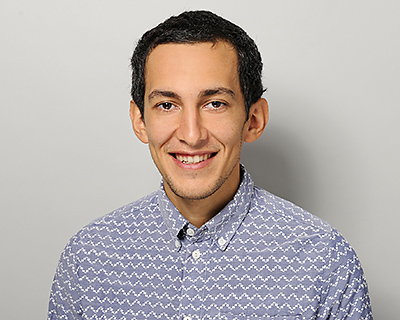
I am a Postdoc at Stanford GSB.
My research focuses on macroeconomics, environmental economics, and trade.
I will join the University of Warwick starting as an Assistant Professor of Economics (AY2027/2028).
You can download my CV
here.
Feel free to reach me at
fsoliman@stanford.edu.
Working Papers
-
Capital Replacement and the Demand for Clean Technology – 2026
PDF | Revised JMP
Abstract
I study how capital replacement shapes green technology adoption and innovation. Empirically, industries with more durable capital exhibit weaker green innovation and energy efficiency responses to energy price increases. A calibrated integrated assessment model combining vintage capital and endogenous innovation shows that limited adoption and innovation constrain substitution away from fossil fuels, making near term decarbonization more reliant on reductions in capital. When firms can instead adopt electric machinery, climate policy can effectively redirect investment towards cleaner equipment. Whether capital replacement constrains the green transition therefore depends on the availability of clean technologies and how policy affects equipment demand.
-
Slack and Economic Development – 2025
PDF | Reject & Resubmit Journal of Political Economy
Abstract
Slack – the underutilization of factors of production – varies systematically with economic development. Using novel firm-level measures from Kenya, we show that utilization is increasing in firm size and market access. We present a model where indivisibility of inputs leads to endogenous steady-state slack and elastic aggregate supply. We empirically validate model predictions against the general equilibrium effects of cash transfers from a large-scale RCT. Consistent with the evidence, the calibrated model predicts a real multiplier of 1.6 and limited inflation. The findings suggest that input indivisibilities and slack are quantitatively important for macroeconomic dynamics in developing countries.
-
The Geographic Leakages of Environmental Regulations: Evidence from the Clean Air Act – 2025
PDF |
Abstract
How large is geographic leakage resulting from place-based environmental policy? We study this question in the context of the landmark US Clean Air Act Amendments. Our paper makes three primary contributions. First, using modern event-study techniques and confidential US Census data, we revisit seminal results characterizing the effects of this environmental regulation on directly regulated plants and industries. Second, we extend prior research by quantifying leakage to unregulated regions and identifying multi-unit firm networks as a key conduit for this leakage. Third, we integrate these findings into an industry spatial equilibrium model that captures both within-firm and cross-location leakage. The model quantifies the economic cost of the regulation, evaluates the contribution of multi-unit firms to regional leakage, and highlights the role of the Clean Air Act in redistributing industrial production across the US. Our analysis reveals that approximately 40% of the geographic leakage we observe is driven by within-firm reallocation, highlighting the critical role of multi-unit firms in shifting economic activity across regions.
Publications
- Democratization, Contracts and Comparative advantage – 2018